
After the fall of Gojoseon, the Korean Peninsula and Manchuria were divided into various small states. Over time, three powerful kingdoms emerged to dominate the region: Goguryeo, Baekje, and Silla. This era is characterized by fierce competition, brilliant culture, and legendary heroes.
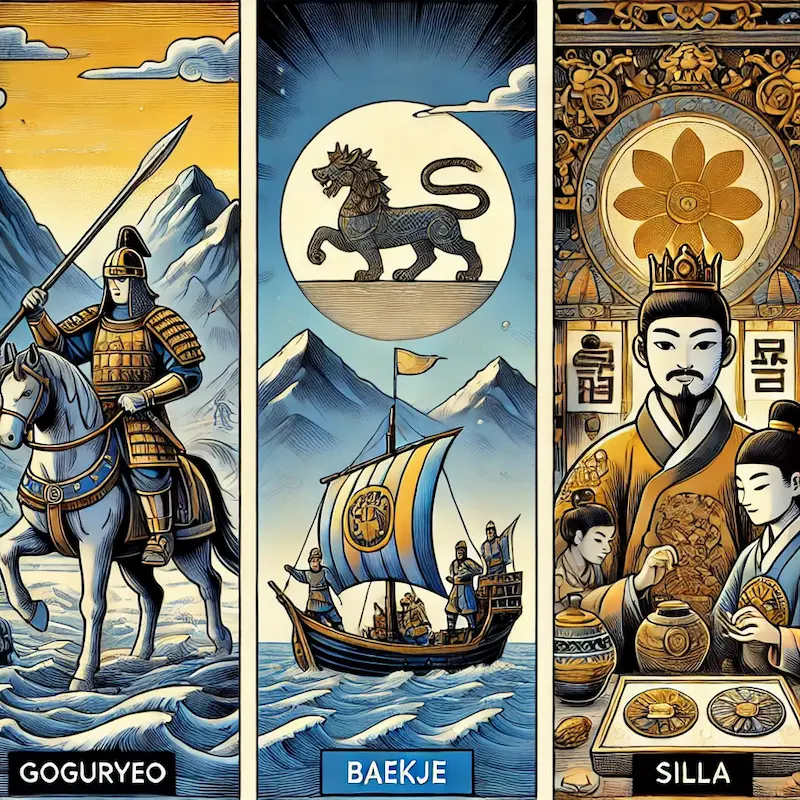
1. Goguryeo: The Great Northern Warrior
Located in the northern part of the peninsula and Manchuria, Goguryeo was a militaristic powerhouse known for its bravery and expansive spirit.
- Founder: King Dongmyeong (Jumong).
- Greatest King: Gwanggaeto the Great, who expanded the territory far into Manchuria.
- Cultural Feature: Dynamic tomb murals that showcase their lifestyle, hunting skills, and advanced tactical warfare.
2. Baekje: The Kingdom of Maritime Trade and Art
Baekje, located in the southwest, was a sophisticated maritime power that focused on international trade and refined artistry.
- Characteristics: Known as the “Kingdom of Culture,” Baekje shared its advanced technology and Buddhism with ancient Japan.
- Artistic Peak: The Great Gilt-bronze Incense Burner of Baekje represents the height of their delicate craftsmanship and Taoist/Buddhist philosophy.
3. Silla: The Kingdom of Gold and Unification
Starting as the weakest of the three in the southeast, Silla eventually outlasted its rivals and unified the peninsula.
- Unique System: Hwarang, an elite youth corps trained in both martial arts and philosophy.
- Golden Age: Silla is famous for its exquisite gold crowns and world-class Buddhist architecture like Seokguram Grotto and Bulguksa Temple.
- Legendary Figure: Queen Seondeok, the first reigning queen in Korean history, who built the Cheomseongdae observatory.