
The Three Kingdoms period (1st century BCE – 7th century CE) was a time of epic struggles, cultural brilliance, and shifting powers on the Korean Peninsula. Before diving into specific events and figures, let’s briefly explore the dramatic birth, glorious rise, and eventual fall of each of these three magnificent kingdoms.
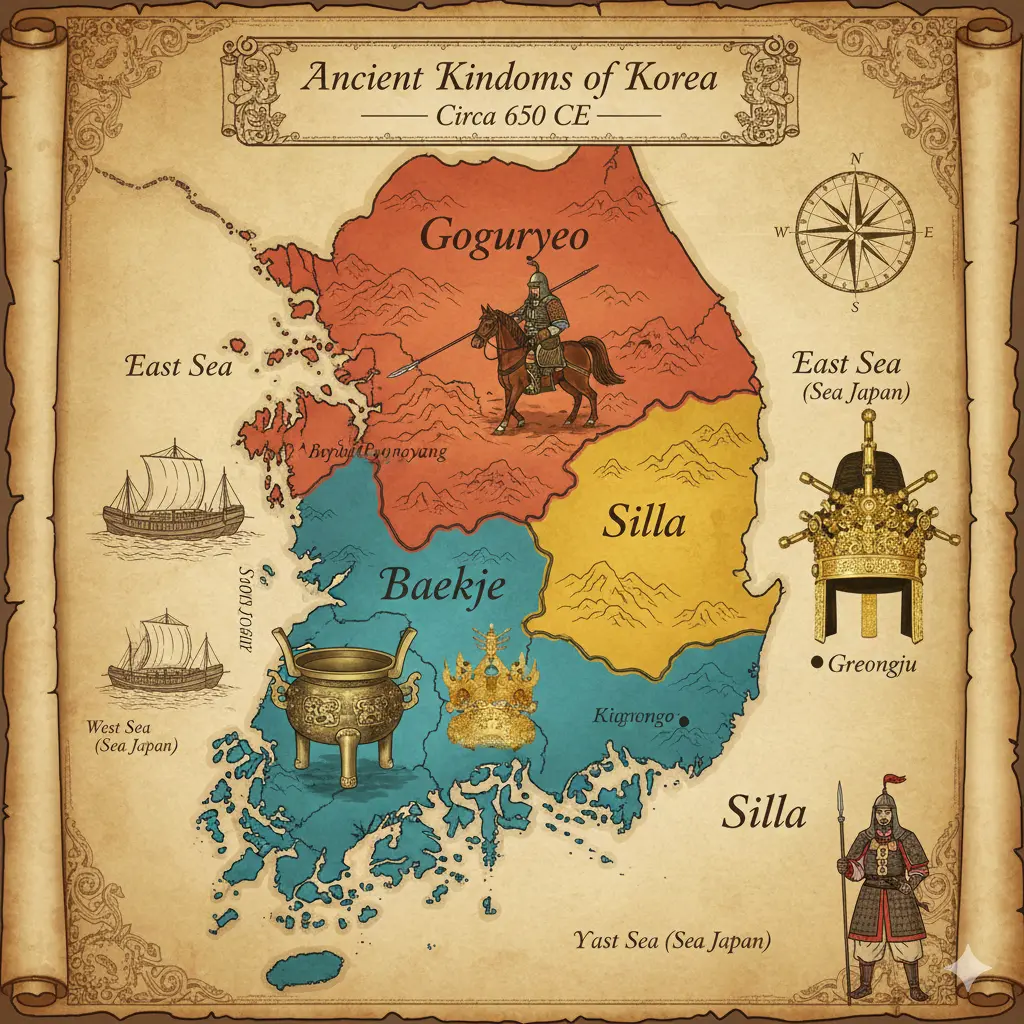
1. Goguryeo : The Enduring Northern Empire
Goguryeo, founded in 37 BCE, was an expansive military state that constantly pushed its boundaries into Manchuria and beyond.
- Birth : Founded by King Dongmyeong (Jumong), Goguryeo began as a small state in the northern regions, built on martial prowess and strategic alliances.
- Rise : Reached its peak under King Gwanggaeto the Great and his son King Jangsu, controlling vast territories and challenging powerful Chinese dynasties. Their tomb murals are a testament to their dynamic culture.
- Fall : Despite formidable resistance, Goguryeo eventually fell to the allied forces of Silla and Tang China in 668 CE, weakened by prolonged warfare and internal strife.
2. Baekje : The Maritime Cultural Powerhouse
Baekje, founded in 18 BCE by King Onjo (son of Jumong), was initially a small kingdom in the central Korean Peninsula that grew into a sophisticated maritime power.
- Birth : Established by King Onjo, Baekje quickly adopted advanced culture from China and strategically expanded along the Han River basin.
- Rise : Excelled in maritime trade and spread its refined culture, including Buddhism and advanced technologies, to Japan. Its artistic achievements, like the Baekje Gilt-bronze Incense Burner, are renowned.
- Fall : Cornered by its ambitious neighbors, Silla and Goguryeo, and facing pressure from Tang China, Baekje was ultimately conquered by the Silla-Tang alliance in 660 CE.
3. Silla : From Weakness to Unification
Silla, founded in 57 BCE, started as the weakest and most isolated of the three kingdoms in the southeastern part of the peninsula. Yet, it possessed the strategic acumen to unify Korea.
- Birth : Established by Park Hyeokgeose, Silla gradually consolidated power over various small tribes in its region, often through peaceful means and strategic alliances.
- Rise : It developed unique institutions like the Hwarang (elite youth corps) and adopted Buddhism to strengthen national identity. Under Queen Seondeok, Silla built advanced observatories and temples.
- Unification & Fall : Through a strategic alliance with Tang China, Silla successfully defeated Baekje (660 CE) and Goguryeo (668 CE), achieving the unification of the Korean Peninsula. However, internal conflicts and the rise of local powers eventually led to its decline and the emergence of the Later Three Kingdoms period in the 10th century.