
Is that stiff neck just from fatigue?
“Ugh, why is my neck so stiff lately?” This is a phrase almost everyone says at least once—whether they’re a busy office worker or just starting to feel the effects of getting older. Most of us blame stress or a bad sleeping position, reach for a pain patch, and move on. I used to do the exact same thing. But did you know? Our bodies are incredibly honest. When unbearable pressure builds up inside, they send signals. We often just ignore them, using “tiredness” as an excuse. Today, I want to listen to the first words spoken by the “Silent Killer”—hypertension.
“Could it be me?” Subtle hints from your body
Hypertension is famous for not causing obvious pain. Instead, it hides craftily in your daily life.
- Why your mornings feel so heavy: Do you wake up with a dull, heavy feeling in the back of your head? When blood pressure is high, brain vessels can’t rest properly at night, causing a “hangover-like” headache in the morning.
- Eyes that suddenly turn red: If you look in the mirror and see bloodshot eyes, it might not just be lack of sleep. It could be a sign that high pressure is constantly irritating the very thin capillaries in your eyes.
- Strange sounds in your ears: Have you ever heard a “whoosh-whoosh” sound—like your heartbeat—in your ears during a quiet night? This is likely the “bruit” (sound) of blood rushing forcefully through narrowed passages.
A Report Card in Two Numbers
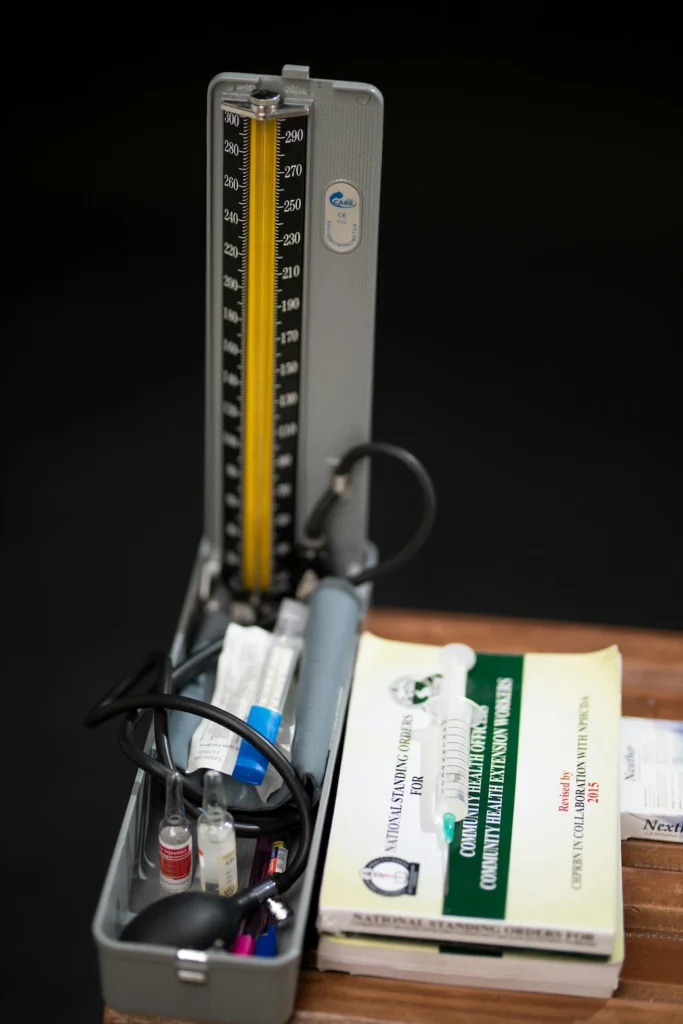
Don’t be intimidated by the numbers on the blood pressure monitor. Let’s look at them through a simple analogy:
- 120 / 80 (Normal): Think of it as a car cruising happily at 60 mph on an open highway. Both your vessels and your heart are in a very comfortable state.
- If the top number exceeds 130: This is a yellow light saying, “Start tapping the brakes!” This is a precious opportunity to avoid the hospital just by adjusting your diet.
- 140 / 90 or higher: This is a red light. The car is speeding and constantly hitting the guardrails. At this point, it’s safer to listen to an expert’s advice and slow down.
Why does everyone talk about blood pressure?
Your blood vessels are like the “delivery routes” that carry blood to every corner of your body. What happens if the water pressure becomes too high? The roads start to crack and split. In particular, the core “distribution centers”—your brain, heart, and kidneys—get damaged first. By the time symptoms appear, the roads are already heavily damaged. That’s why we have to manage it “in advance.”
The easiest thing we can do today
“Start by getting to know your numbers.” There’s no need to be blindly afraid. Knowing what your current blood pressure is means you’ve already started half the management. Tomorrow morning, wake up and face the monitor just once. That will be the first big step in protecting your precious blood vessels.
Disclaimer: This content is for informational purposes only and is not a substitute for professional medical advice. Always consult with a healthcare professional before making changes to your diet or health routine. The author is not liable for any consequences arising from the use of this information.